Seventeen World Heritage sites — grouped so you can actually visit them without going mad.
How to group them
Poland’s UNESCO sites are spread unevenly — several sit almost side by side in Lesser Poland, others stand alone in Podlasie or Pomerania. Sensible routes fall into four regional groups.
Lesser Poland: four sites in two days
Kraków, Wieliczka, Bochnia and Kalwaria Zebrzydowska all fit within a fifty-kilometre radius. Realistically that is two full days, as the mines alone take three hours each.
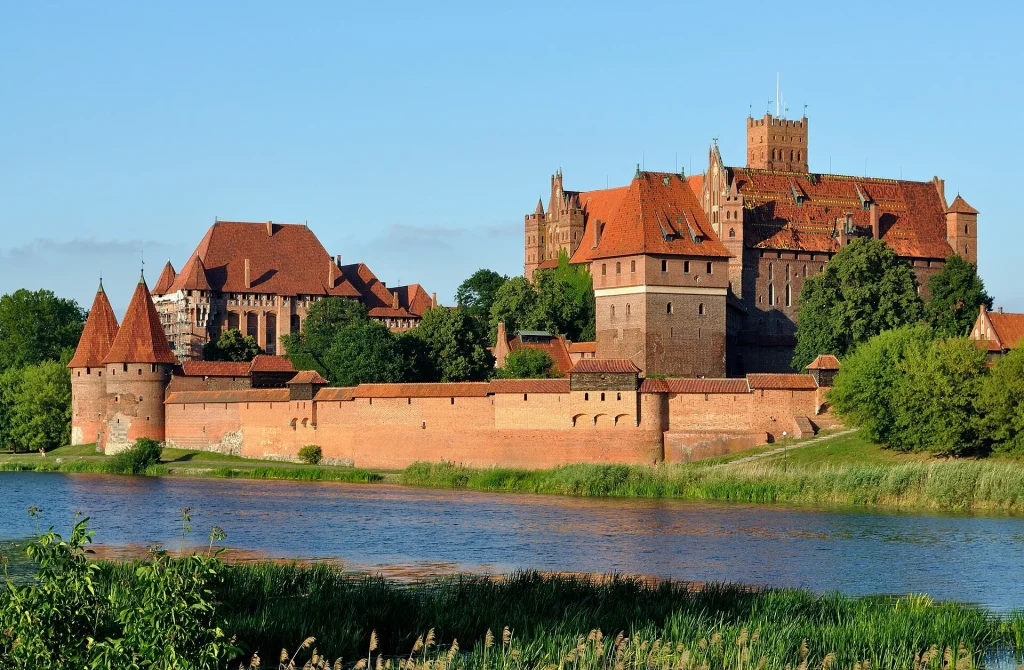
Pomerania: Malbork and Toruń
They are one hundred and thirty kilometres apart. Malbork needs three hours, Toruń half a day — together a comfortable weekend.
Subcarpathia: wooden churches
The most scattered group. The buildings stand in small villages and some open only after a phone call to their keeper. Allow three days and some patience.
The loners
Białowieża Forest, the Centennial Hall, Zamość and the flint mine at Krzemionki connect to nothing nearby — each needs a trip of its own.